성 이냐시오 (로욜라)
Sanctus Ignatius de Loyola · 1491년 ~ 1556년 7월 31일 · 예수회(Society of Jesus, SJ) 창립자 · 「영신수련」의 저자 · 반종교개혁의 영혼
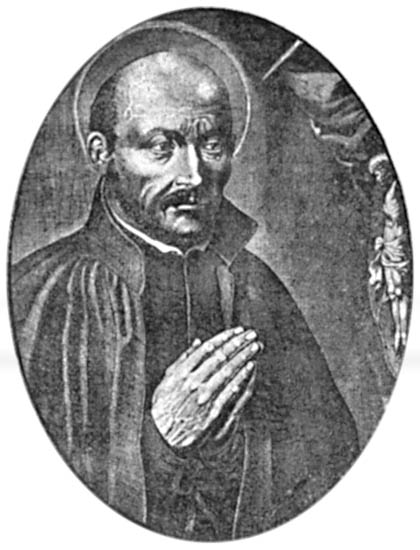
바스크의 한 귀족 청년
이냐시오는 1491년 스페인 북부 바스크 지방의 작은 마을 로욜라에서 태어났다. 본명은 이니고 로페스 데 로욜라. 13남매의 막내. 부모는 어린 그를 일찍 잃었고, 그는 친척의 손에서 성장했다.
청년이 되어서는 — 카스티야 왕실의 시동(侍童)으로 들어가 궁정의 화려함을 몸으로 익혔다. 결투에 능했고, 도박을 즐겼으며, 여인들의 사랑을 구했다. 전형적인 16세기 스페인 귀족 청년. 허영의 절정에서 살았다. 후에 그가 자서전에서 자기 청년기를 부른 한 줄 — “세상의 영광에 깊이 빠진 헛된 사람이었다.”
팜플로나 — 부서진 다리
1521년 5월 20일. 프랑스군이 스페인의 팜플로나 요새를 공격했다. 30세의 군인 이냐시오는 수적으로 절대 불리한 자리에서 끝까지 항복을 거부했다. 그러던 중 — 프랑스군의 포탄이 그의 두 다리를 강타했다. 오른쪽 다리는 골절, 왼쪽 다리는 산산이 부서졌다.
성이 함락되자 프랑스군은 그의 용기에 감동하여 그를 자기 영지로 후송했다. 거기서 6개월간 — 수술과 재수술과 또 재수술. 당시 마취도 없는 시대. 뼈를 톱으로 잘라내고 다시 맞추는 고통 속에서 그는 살아남았지만 평생 절뚝거리는 다리를 얻었다.
회복기의 두 권의 책 — 한 인생을 바꾸다
긴 회복기. 누워서 할 일이 없는 그는 — 기사도 소설을 청했다. 그러나 집 안에 있던 책은 단 두 권뿐. 「그리스도의 생애」(루돌프 폰 작센 작)와 「황금 전설」(자코부스 데 보라기네의 성인 전기집).
심심함을 못 견뎌 이 두 책을 읽기 시작했다. 그리고 그의 일생이 바뀌었다.
그는 자서전에서 기묘한 발견을 기록한다 — 기사도 소설을 상상하고 나면 한참 후엔 영혼이 메말랐다. 그러나 그리스도와 성인들의 일생을 상상하고 나면 — 한참 후에도 영혼이 평화로웠다. 이 둘의 차이가 그에게 영의 식별(discernment of spirits)의 첫 발견이었다 — 후일 「영신수련」의 핵심 도구가 된다.
만레사 동굴 — 1년의 침묵
1522년 회복 후, 이냐시오는 — 몬세라트 수도원 성당에서 자기 칼을 성모님 앞에 봉헌하고 거지의 옷으로 갈아입었다. 인근 만레사(Manresa)의 한 동굴에서 11개월간 침묵·단식·기도 중에 살았다.
그 동굴에서 그가 받은 환시들은 — 그의 영성의 모든 근원이 되었다. 카르도네르 강가의 환시 — 모든 것의 통일성을 한순간에 본 신비. 그가 후에 “그 한 순간이, 그 후 평생 동안 책을 통해 배운 모든 것보다 많은 것을 가르쳐 주었다”고 말한 자리.
이 시기에 — 「영신수련」(Exercitia spiritualia)의 핵심 메모가 쏟아졌다. 30일간의 체계적인 묵상 안내서. 그리스도와의 인격적 만남을 위한 방법론. 어떻게 자기 마음의 움직임을 분별할 것인가. 후대 모든 가톨릭 피정의 기초가 되었다.
학생 — 33세에 라틴어 ABC부터
이냐시오는 33세에 — 라틴어 알파벳부터 다시 시작했다. 바르셀로나·알칼라·살라망카에서 신학과 인문학을 공부했고, 마침내 파리 대학에서 1535년 석사를 받았다.
그 대학에서 만난 사람들 — 프란치스코 사베리오, 베드로 파베르, 그리고 다섯 명의 다른 동료. 1534년 8월 15일 몽마르트 언덕의 성 디오니시오 성당 작은 경당에서 — 7명이 함께 가난·정결·예루살렘 순례·교황에 대한 순종을 서약했다.
예수회 — 1540년
예루살렘 순례는 전쟁으로 막혔다. 그래서 그들은 로마로 향했다. 1540년 9월 27일 — 교황 바오로 3세가 칙서 「Regimini militantis Ecclesiae」로 예수회(Societas Iesu, Society of Jesus)를 공식 인준했다.
예수회의 모토 — Ad maiorem Dei gloriam — AMDG (하느님의 더 큰 영광을 위하여). 이 한 줄이 — 그 후 480년 동안 4만 명 예수회원의 살아 있는 표어가 되었다.
이냐시오는 1541년 예수회 초대 총장에 선출되었지만 원치 않았다. 동료들의 압력에 결국 받아들였고, 그 후 남은 15년을 로마의 작은 방에서 — 예수회 회헌을 짓고, 6,800통의 편지를 쓰고, 동료들을 인도·일본·남미·아프리카로 파견하며 살았다.
1556년 — 가장 큰 자기 영광을 가장 작은 죽음으로
1556년 7월 31일 새벽. 이냐시오는 비서에게 교황의 강복을 청하라고 시키지도 못한 채 — 조용히 선종했다. 65세.
그가 마지막 30년 동안 한 일 — 유럽 전역에 학교 35개, 대학 6개, 신학교 수십 개를 세웠다. 프란치스코 사베리오를 인도와 일본으로 보냈다. 남아메리카·아프리카·필리핀까지 — 예수회의 발이 닿지 않는 곳이 없게 했다.
시성 — 1622년
축일 7월 31일. 예수회 창립자. 피정 운동의 아버지. 군인·교육자·바스크·로마교구·임산부의 주보 성인. 1622년 그레고리오 15세 교황 시성 (같은 날 — 프란치스코 사베리오, 데레사 아빌라, 필리포 네리, 이시도로 함께 시성, 가톨릭 역사에서 가장 빛나는 한 날).
그가 찾아간 하느님의 뜻
이냐시오의 일생은 — 부서진 다리에서 새 인생이 시작된 사람의 가장 강력한 증언이다. 그가 군인의 자존심을 끝까지 살았다면 — 한 영주의 무장이 되었을 것이다. 그러나 팜플로나의 포탄이 그 다리를 부쉈을 때 — 그분이 그 부서진 자리에 훨씬 더 큰 일을 두셨다.
그리고 — 영의 식별. 자기 마음의 움직임을 세밀히 관찰하는 그 한 가지 능력이 — 후대 모든 영적 지도의 표준 도구가 되었다. 그가 가르친 한 줄 — “하느님은 위안에도 계시고, 황량함에도 계시다. 그러나 우리에게 보내신 메시지가 다르다. 그 메시지를 듣는 자가 — 그분의 뜻을 산다.”
시대의 한 폭 — 16세기 가톨릭 종교개혁과 예수회
이냐시오 로욜라(1491~1556)가 1540년 교황 바오로 3세에게서 인준받은 예수회(Society of Jesus)는 — 16세기 가톨릭 종교개혁(Counter-Reformation)의 가장 큰 도구였다. 그 시대 — 1517년 루터의 종교개혁 이후 30년간 — 북유럽 전체가 — 잉글랜드·스칸디나비아·독일 절반·네덜란드 절반 — 가톨릭에서 떨어져 나갔다. 제국 교황 사이의 종교 전쟁이 일어나고 (1546~1555 슈말칼덴 전쟁), 가톨릭 교회는 — 거의 1,500년 만에 — 자기 정체성을 처음부터 다시 정의해야 했다. 그 한가운데 — 이냐시오는 — 9명의 동료 — 프란치스코 사베리오, 베드로 파베르, 디에고 라이네스, 알폰소 살메론 등 — 과 함께 — “어디든 교황이 보내는 곳으로 간다”는 — 네 번째 서원(특별한 순명 서원)을 가진 — 새로운 형태의 수도회를 만들었다. 예수회의 천재성은 — 셋이었다 — (1) 학교·대학 — 16~18세기에 — 예수회는 — 전 세계에 약 800개의 학교·대학을 — 설립·운영, (2) 선교 — 프란치스코 사베리오의 인도·일본 선교, 마테오 리치의 중국 선교, 페드로 클라베르의 아메리카 노예 사목 — 등 — 그 시대 — 가톨릭 세계 선교 — 의 80%가 — 예수회의 손에 — 들어갔다, (3) 영성 — 이냐시오가 직접 만든 “영성 수련(Spiritual Exercises)” — 4주간의 — 체계적 기도·식별 프로그램 — 이 — 16세기 이래 — 가톨릭 영성의 가장 큰 한 가닥이 되었다. 2013년 — 예수회 첫 교황 — 프란치스코 교황(베르고글리오) — 이 — 베드로의 자리에 — 즉위했다 — 473년 만의 일이다.
묵상
이냐시오는 우리에게 묻는다 — 너의 부서진 다리는 — 새 인생의 시작이 될 수 있는가? 가장 큰 실패가 — 가장 깊은 회심의 출발점이다. 그리고 — 너는 오늘 하루 너의 마음의 위로와 황량함을 분별할 수 있는가? 그 분별이 없는 사람은 — 자기 길을 잃는다.
Saint Ignatius of Loyola
Sanctus Ignatius de Loyola · 1491 – July 31, 1556 · Founder of the Society of Jesus (Jesuits, SJ) · Author of the *Spiritual Exercises* · The Soul of the Counter-Reformation
A Young Basque Noble
Ignatius was born in 1491 in the small Basque village of Loyola in northern Spain. His birth name was Íñigo López de Loyola. The youngest of thirteen children. He lost both parents in childhood and was raised by relatives.
As a young man — he entered the royal court of Castile as a page and learned in his body the splendor of the court. He was skilled in dueling, enjoyed gambling, and sought the love of women. A typical sixteenth-century Spanish nobleman. He lived at the height of vanity. Later, in his autobiography, he summed up his youth in a single line — “A vain man, deeply absorbed in the glory of the world.”
Pamplona — A Shattered Leg
May 20, 1521. The French army attacked the Spanish fortress at Pamplona. The 30-year-old soldier Ignatius — refused to surrender to the end, though hopelessly outnumbered. In the middle of the battle — a French cannonball shattered both his legs. The right leg was broken; the left was completely smashed.
After the fortress fell, the French, moved by his courage, transported him to their own land. There, for six months — surgery, re-surgery, and again surgery. In an age without anesthesia. Sawing through bone and resetting it again — in that pain he survived, but he gained a leg that limped for the rest of his life.
Two Books in Convalescence — That Changed One Life
A long convalescence. With nothing to do as he lay there — he asked for chivalric romances. But the only two books in the house were “The Life of Christ” (by Ludolph of Saxony) and “The Golden Legend” (Jacobus de Voragine’s collection of saints’ lives).
Out of sheer boredom he began to read these two books. And his life changed.
In his autobiography he records a strange discovery — whenever he imagined the chivalric romances, after a while his soul felt dry. But whenever he imagined the lives of Christ and the saints — long afterwards his soul remained at peace. The difference between these two became his first discovery of the discernment of spirits — which would later become the central instrument of the Spiritual Exercises.
The Cave of Manresa — A Year of Silence
After his recovery in 1522, Ignatius — laid his sword before Our Lady at the monastery of Montserrat and put on a beggar’s robe. At a cave near Manresa he lived for eleven months in silence, fasting, and prayer.
The visions he received in that cave became — the source of his entire spirituality. The vision by the river Cardoner — a moment in which he saw the unity of all things. He would later say of that single moment, “In that one moment, I was taught more than I learned through books for the rest of my life.”
During this period — the core memoranda of the Spiritual Exercises (Exercitia spiritualia) poured out. A systematic thirty-day guide to meditation. A methodology for personal encounter with Christ. How to discern the movements of one’s own heart. The foundation of every later Catholic retreat.
A Student — Starting Latin ABCs at Thirty-Three
Ignatius at thirty-three — started again from the alphabet of Latin. He studied theology and the liberal arts at Barcelona, Alcalá, and Salamanca, and at last received his master’s degree at the University of Paris in 1535.
The people he met at the university — Francis Xavier, Peter Faber, and five other companions. On August 15, 1534, in a small chapel of the Church of St. Denis on Montmartre hill — the seven of them together vowed poverty, chastity, pilgrimage to Jerusalem, and obedience to the pope.
The Society of Jesus — 1540
The Jerusalem pilgrimage was blocked by war. So they turned to Rome. On September 27, 1540 — Pope Paul III by the bull Regimini militantis Ecclesiae officially approved the Society of Jesus (Societas Iesu).
The motto of the Jesuits — Ad maiorem Dei gloriam — AMDG (“For the greater glory of God”). This single line — for 480 years has been the living watchword of 40,000 Jesuits.
Ignatius was elected the first Superior General of the Society in 1541, though he did not want it. Pressed by his companions he finally accepted, and spent his remaining fifteen years in a small room in Rome — composing the Jesuit Constitutions, writing 6,800 letters, and sending his companions to India, Japan, South America, and Africa.
1556 — His Greatest Glory in the Smallest Death
At dawn on July 31, 1556. Ignatius — without even having been able to ask his secretary to summon the pope’s blessing — died quietly. He was 65.
In his last thirty years he had done this — founded 35 schools, 6 universities, and dozens of seminaries throughout Europe. Sent Francis Xavier to India and Japan. Saw to it that there was no place — South America, Africa, the Philippines — where the foot of a Jesuit did not reach.
Canonization — 1622
Feast day July 31. Founder of the Society of Jesus. Father of the retreat movement. Patron saint of soldiers, educators, the Basques, the Diocese of Rome, and expectant mothers. Canonized in 1622 by Pope Gregory XV (on the same day — together with Francis Xavier, Teresa of Ávila, Philip Neri, and Isidore — one of the most luminous days in Catholic history).
The Will of God He Sought
Ignatius’ life is the most powerful witness of a man for whom a new life began at a shattered leg. Had he kept the pride of a soldier to the end, he would have become the man-at-arms of some lord. But when the Pamplona cannonball shattered that leg — He set, in that broken place, a far greater work.
And — the discernment of spirits. The single ability to observe the movements of one’s own heart carefully — became the standard instrument of all later spiritual direction. One line he taught — “God is in consolation, and God is in desolation. But the message he sends to us is different. The one who hears that message — lives his will.”
A Snapshot of the Age — The Catholic Counter-Reformation and the Jesuits
When Ignatius of Loyola (1491–1556) received papal approval for the Society of Jesus from Paul III in 1540, the new order was — the largest instrument of the sixteenth-century Catholic Counter-Reformation. In the thirty years after Luther in 1517 — all of northern Europe — England, Scandinavia, half of Germany, half of the Netherlands — had broken away from Catholicism. Religious wars between empire and papacy broke out (the Schmalkaldic War 1546–1555), and the Catholic Church — for the first time in almost 1,500 years — had to redefine its identity from the ground up. In the middle of that — Ignatius and nine companions — Francis Xavier, Peter Faber, Diego Laínez, Alfonso Salmerón, and others — made a new kind of order with a fourth special vow of obedience to the pope, ready to go anywhere. The Jesuit genius lay in three things — (1) Schools and universities: between the sixteenth and eighteenth centuries the Jesuits founded and ran some 800 schools and universities worldwide; (2) Mission: Francis Xavier’s India and Japan; Matteo Ricci’s China; Pedro Claver’s pastoral work among African slaves in the Americas — about 80% of Catholic world mission of the age was Jesuit; (3) Spirituality: Ignatius’s own four-week, systematic Spiritual Exercises of prayer and discernment, becoming since the sixteenth century one of the largest threads of Catholic spirituality. In 2013 the first Jesuit pope — Francis (Bergoglio) — took the chair of Peter — for the first time in 473 years.
Meditation
Ignatius asks us — could your shattered leg become the beginning of a new life? The deepest failure is the starting point of the deepest conversion. And — can you, today, discern the consolation and the desolation of your own heart? Without this discernment, a person loses his road.