성 바르톨로메오 사도
Sanctus Bartholomaeus · ?~1세기 후반 · 카나의 청년 → 아르메니아의 산 채로 가죽 벗긴 자
두 이름의 한 사람
복음서를 읽다 보면 한 가지가 이상하다. 마태·마르코·루카 복음서에는 ‘바르톨로메오’가 12사도 명단에 있는데(마태 10,3 등), 요한 복음에는 그 이름이 없다. 대신 요한복음에는 ‘나타나엘(Nathanael)’ 이라는 한 사도가 등장한다(요한 1,45-51; 21,2).
학자들 거의 모두가 동의하는 결론은 — 나타나엘과 바르톨로메오는 같은 사람이다. 바르톨로메오는 본명이 아니라 부칭(父稱) — ‘톨마이의 아들(Bar-Tolmai)’ — 이고, 그의 개인 이름이 나타나엘(Nathanael, “하느님이 주신 분”)이었다.
그래서 우리는 이 사도를 두 이름으로 안다 — 명단에선 바르톨로메오, 부르심 장면에선 나타나엘.
*”나자렛에서 무슨 좋은 것이 나올 수 있겠소?”*
요한복음 1장의 부르심 장면. 필립보가 막 부르심받자마자 나타나엘에게 달려가 외쳤다 — “모세가 율법에 기록하였고 예언자들도 기록하였던 분을 우리가 만났소. 그분은 요셉의 아들 예수이신데 나자렛 출신이오”(요한 1,45).
나타나엘의 답이 우리 모두의 마음에 박힌다 — “나자렛에서 무슨 좋은 것이 나올 수 있겠소?”(요한 1,46).
이 한 줄이 그의 성격을 보여준다. 나자렛은 1세기 갈릴래아의 작은 시골 마을, 인구 약 200~400명. 큰 인물이 거기서 나올 거라 누구도 기대하지 않았다. 나타나엘은 그 일반적인 회의주의를 솔직하게 입에 담은 사람이었다.
필립보는 논쟁하지 않았다. 짧게 답했다 — “와서 보시오”(요한 1,46). 나타나엘은 갔다.
*”참으로 이스라엘 사람이로다”*
예수님께서 다가오는 나타나엘을 바라보시며 말씀하셨다 — “보라, 저 사람이야말로 참으로 이스라엘 사람이다. 저 사람에게는 거짓이 없다”(요한 1,47).
나타나엘이 놀라 물었다 — “저를 어떻게 아십니까?” 예수님께서 답하셨다 — “필립보가 너를 부르기 전에, 네가 무화과 나무 아래에 있는 것을 내가 보았다”(요한 1,48).
이 한 마디에 나타나엘의 모든 회의주의가 무너졌다. 그가 외쳤다 — “스승님, 스승님은 하느님의 아드님이시며 이스라엘의 임금이십니다”(요한 1,49).
무화과 나무 아래 — 1세기 유다인 전승에서 무화과 나무 아래는 율법학자가 기도하고 묵상하는 자리의 상징이었다. 예수님께서 “내가 너를 보았다” 고 하신 것은 단순히 위치를 알았다는 게 아니라, 그가 거기서 무슨 생각을 하고 있었는지, 무엇을 청하고 있었는지를 다 아셨다는 뜻이었으리라. 나타나엘은 어쩌면 그 자리에서 메시아를 청하고 있었을지 모른다. 그리고 그 청의 답이 지금 자기 앞에 서 있는 분이라는 것을 한 마디에 깨달았다.
예수님께서는 더 큰 약속을 더하셨다 — “너는 이보다 더 큰 일들을 보게 될 것이다. 너희는 하늘이 열린 채 하느님의 천사들이 사람의 아들 위에서 오르내리는 것을 보게 될 것이다”(요한 1,50-51).
야곱이 베델에서 본 사다리(창세 28,12) — 그 사다리가 이제 예수님 자신이라는 선언.
부활 후 호숫가의 일곱
복음서 안에서 나타나엘이 다시 등장하는 자리는 부활 후 갈릴래아 호숫가의 한 장면이다. “갈릴래아 카나 출신 나타나엘”(요한 21,2)이라는 한 줄이 그의 출신지를 알려준다. 카나(Cana) — 예수님께서 첫 기적(물을 포도주로 바꾸심)을 행하신 그 작은 마을. 어쩌면 나타나엘은 그 자리에 있었을지 모른다.
가장 먼 곳까지 — 아르메니아·인도·메소포타미아
전승은 바르톨로메오의 후일 선교를 가장 다양한 방향으로 그린다. 에우세비오의 「교회사」(5,10)는 그가 인도까지 갔다고 전한다(어쩌면 토마스보다 더 동쪽으로). 다른 전승은 그가 아라비아, 페르시아, 메소포타미아를 거쳤다고 한다.
가장 굳건한 전승은 그가 아르메니아에서 마지막 선교를 했다는 것이다. 아르메니아는 — 세계 최초로 그리스도교를 국교로 선포한 나라다(301년, 콘스탄티누스 大제의 313년 밀라노 칙령보다 12년 앞섬). 아르메니아 교회는 — 바르톨로메오와 유다 타대오 두 사도를 자신들의 “첫 빛(Lusavorich)”으로 모셔 왔고, 4세기 초 그리고리 일루미네이터(Gregory the Illuminator)가 티리다테스 3세 왕을 회심시킨 일도 — 바르톨로메오가 1세기에 뿌린 씨앗에서 자란 열매로 본다. 1세기 아르메니아는 — 로마와 페르시아(파르티아 제국) 사이의 가장 좁은 완충 지대였다. 두 거대 제국이 100년마다 한 번씩 전쟁을 벌이며 서로 빼앗던 산악 왕국. 그 끊임없는 정치적 폭풍 속에서도 작은 그리스도교 공동체가 살아남았고, 결국 왕의 회심과 국교 선포까지 이어진다. 오늘날 약 1,000만 명의 아르메니아 사도교회 신자는 — 자신들의 신앙이 바르톨로메오의 1세기 발걸음에 직접 닿는다고 믿는다.
가장 강한 전승은 그의 마지막을 아르메니아(Armenia) — 오늘날의 동부 튀르키예와 아르메니아 — 로 그린다. 거기서 그는 왕 폴리미우스(Polymius)를 회심시킨 후, 그 동생 아스티아게스(Astyages)에게 잡혔다.
산 채로 가죽 벗김 — 그리스도교에서 가장 잔혹한 순교
전승에 따르면 그의 순교 방식은 그리스도교 순교사 전체에서 가장 잔혹한 한 자리를 차지한다 — 산 채로 가죽이 벗겨졌고, 그 뒤 거꾸로 매달려 십자가에 못 박혔다(또는 그 직전에 참수되었다는 전승도 있다).
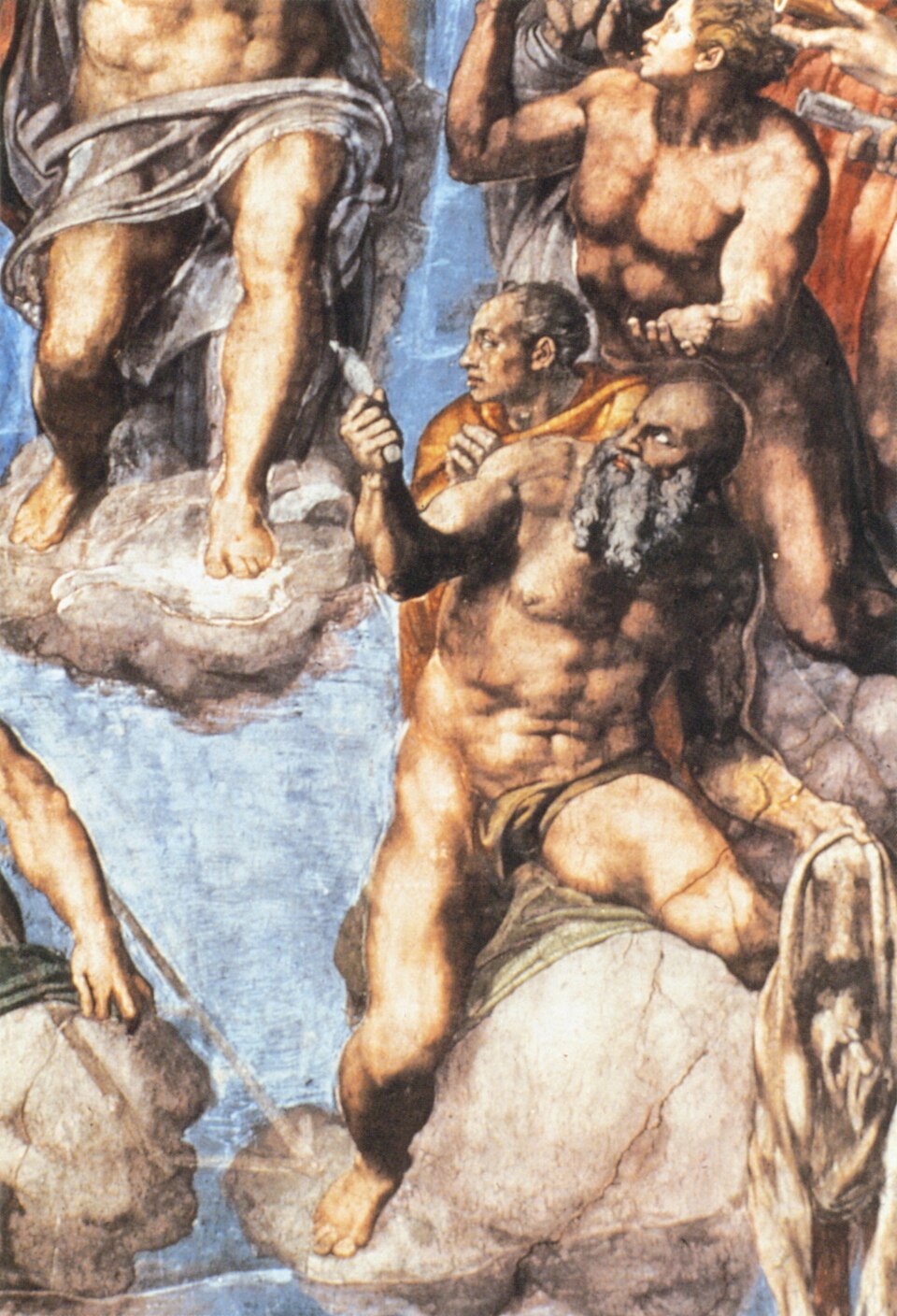
이 잔혹한 죽음의 방식 때문에 미술사에서 바르톨로메오는 늘 한 가지 모티브로 그려진다 — 자기 가죽을 손에 들고 있는 모습. 마치 옷처럼.
미켈란젤로의 자화상
이 모티브의 가장 유명한 그림이 시스티나 성당의 미켈란젤로 「최후의 심판」(1541)이다. 그 거대한 벽화 한가운데 그리스도의 발치, 바르톨로메오가 한 손에 가죽을 들고 서 있다. 그 벗겨진 가죽의 얼굴 — 미켈란젤로는 거기에 자기 자신의 자화상을 그려 넣었다.
해석은 다양하다. 어떤 학자는 미켈란젤로가 그 시기 깊은 회의에 빠져 있었기 때문이라 한다. 또 어떤 학자는 그것이 “내 영혼을 그분 앞에 다 벗어 놓는다” 는 신앙 고백이라 한다. 어쨌든, 67세의 미켈란젤로가 자기 모든 것을 한 사도의 발치에 벗어 놓은 한 장면이다.
시성 — 사도 시대 보편 공경
축일 8월 24일. 바르톨로메오의 유해는 6세기경 아르메니아에서 이탈리아 남부 리파리(Lipari) 섬으로 옮겨졌고, 838년 사라센의 침공 때 베네벤토(Benevento)로, 983년 신성로마제국 황제 오토 3세가 로마 티베레 강 중간의 작은 섬에 안치했다. 오늘날 산 바르톨로메오 알리솔라(San Bartolomeo all’Isola) 성당이 그 자리. 2,000년 동안 로마의 한 작은 섬에 한 사도가 잠들어 있다.
시대 배경 — 아르메니아, 첫 그리스도교 국가
바르톨로메오가 활동했다는 아르메니아는 301년 그리스도교를 국교로 선포한 세계 최초의 나라가 되었다 (로마 제국보다 1세기 빠르게). 오늘날 아르메니아 사도교회(Armenian Apostolic Church)는 자신들의 사도적 계승을 바르톨로메오와 유다 타대오 두 사도에 둔다.
그가 찾아간 하느님의 뜻
바르톨로메오의 일생을 한 줄로 요약하면 — “나자렛에서 무슨 좋은 것이 나올 수 있겠는가”라고 의심했던 자가, 자기 가죽을 벗겨도 그분을 떠나지 않은 자가 되었다.
그의 첫 말과 마지막 행동 사이의 거리가 얼마나 큰가. 처음엔 회의주의자였다. 마지막엔 자신의 살갗 전부를 그분께 바쳤다. 그 사이에 무엇이 있었는가 — 무화과 나무 아래에서 “내가 너를 보았다”는 한 음성을 들은 것뿐이다.
자기를 본 자가 있다는 사실이, 한 사람을 그토록 멀리 데려간다.
묵상
오늘 우리도 누군가에게 — 자녀에게, 친구에게, 동료에게 — 무화과 나무 아래의 그 침묵을 줄 수 있다. 그를 정말로 보는 것. 그가 무엇을 청하고 있는지를 아는 것. 그 한 번의 진심 어린 응시가 한 사람을 평생 데려가는 길이 될 수 있다.
Saint Bartholomew the Apostle
Sanctus Bartholomaeus · ? – late first century · A Young Man of Cana → Flayed Alive in Armenia
One Man with Two Names
A reader of the Gospels notices a puzzle. In Matthew, Mark, and Luke the name “Bartholomew” appears in the list of the Twelve (Matthew 10:3, etc.); in John it never appears. Instead John introduces “Nathanael” (John 1:45–51; 21:2).
Nearly every scholar agrees on the conclusion: Nathanael and Bartholomew are the same man. Bartholomew was not his given name but a patronymic — “son of Tolmai (Bar-Tolmai)” — and his personal name was Nathanael (“God has given”).
So we know this apostle by two names — Bartholomew in the lists, Nathanael in the calling scene.
*”Can Anything Good Come Out of Nazareth?”*
The calling scene in John 1. Philip, just called himself, ran to Nathanael and cried — “We have found him of whom Moses in the Law and also the prophets wrote, Jesus of Nazareth, the son of Joseph” (John 1:45).
Nathanael’s answer is one that lodges in every heart — “Can anything good come out of Nazareth?” (John 1:46).
That one line shows his character. Nazareth was a small Galilean village of perhaps 200 to 400 people in the first century. No one expected a great figure to come from there. Nathanael was a man who spoke that ordinary scepticism honestly aloud.
Philip did not argue. He answered briefly — “Come and see” (John 1:46). And Nathanael went.
*”Behold, an Israelite Indeed”*
As Nathanael approached, Jesus looked at him and said — “Behold, an Israelite indeed, in whom there is no deceit!” (John 1:47).
Astonished, Nathanael asked, “How do you know me?” Jesus answered, “Before Philip called you, when you were under the fig tree, I saw you” (John 1:48).
In that one sentence all of Nathanael’s scepticism collapsed. He cried out — “Rabbi, you are the Son of God, you are the King of Israel!” (John 1:49).
Under the fig tree — in first-century Jewish tradition the fig tree was the symbolic place of a scholar’s prayer and meditation on the Law. When Jesus said “I saw you,” he did not merely mean that he knew his location; he meant he knew what he was thinking there, what he was asking for. Perhaps under that fig tree Nathanael had been praying for the Messiah. And in a single line he understood that the answer to that prayer was standing in front of him.
Jesus added an even greater promise — “You will see greater things than these. You will see heaven opened, and the angels of God ascending and descending upon the Son of Man” (John 1:50–51).
The ladder Jacob saw at Bethel (Genesis 28:12) — that ladder is now Jesus himself.
Seven by the Lake After the Resurrection
Nathanael reappears in the Gospels at a scene by the Sea of Galilee after the Resurrection. A single phrase tells us his hometown: “Nathanael of Cana in Galilee” (John 21:2). Cana — the small village where Jesus performed his first sign, changing water into wine. Perhaps Nathanael was at that wedding.
To the Farthest Places — Armenia, India, Mesopotamia
Tradition draws Bartholomew’s later mission in the widest directions of any apostle. Eusebius records in his Church History (5.10) that he went as far as India — perhaps farther east than even Thomas. Other traditions take him through Arabia, Persia, Mesopotamia.
The strongest tradition places his end in Armenia — what is now eastern Turkey and Armenia. There, after converting King Polymius, he was seized by the king’s brother Astyages.
Flayed Alive — One of the Cruellest Martyrdoms in Christian Memory
According to tradition his manner of death holds one of the cruellest places in the whole history of Christian martyrdom: he was flayed alive, and afterwards either crucified head-down or beheaded (the traditions vary).
Because of this brutal form of death, Bartholomew has always been depicted in Christian art with a single motif — holding his own skin in his hand, as though it were a garment.
Michelangelo’s Self-Portrait
The most famous treatment of this motif is Michelangelo’s “Last Judgment” in the Sistine Chapel (1541). At the centre of that vast fresco, at the foot of Christ, Bartholomew stands holding his skin in one hand. On the face of that flayed skin — Michelangelo painted his own self-portrait.
Interpretations vary. Some scholars say Michelangelo was passing through a period of deep self-doubt. Others read it as a confession of faith — “I lay my whole soul bare before him.” Whatever the reason, here is the sixty-seven-year-old Michelangelo laying himself, entire, at the feet of an apostle.
Canonization — Universal Veneration from the Apostolic Age
His feast day is August 24. Around the sixth century Bartholomew’s relics were translated from Armenia to the Italian island of Lipari. After the Saracen invasions of 838 they were carried to Benevento, and in 983 the Holy Roman Emperor Otto III placed them on a small island in the middle of the Tiber in Rome. There today stands the church of San Bartolomeo all’Isola. For two thousand years, on a small island in Rome, an apostle has slept.
Historical Context — Armenia, the First Christian Nation
Armenia, where Bartholomew is said to have died, became the first nation in the world to declare Christianity its state religion — in A.D. 301, a full century before the Roman Empire. The Armenian Apostolic Church today traces its apostolic succession to two apostles — Bartholomew and Jude Thaddaeus.
The Will of God He Found
Bartholomew’s life can be summed up in a single line — the man who doubted that anything good could come out of Nazareth became the man who did not leave him even when his own skin was being peeled off.
How great a distance between his first words and his last actions. He began a sceptic. He ended by laying his whole skin in offering. What lay between? — Only one voice under a fig tree, saying “I saw you.”
The fact that someone has seen us is what carries a person that far.
A Snapshot of the Age — Armenia: the First Christian Nation
The strongest tradition places Bartholomew’s last mission in Armenia — the first nation in the world to make Christianity its state religion (301 AD, twelve years before Constantine’s Edict of Milan). The Armenian Apostolic Church holds Bartholomew and Jude Thaddaeus as her two “first lights” (Lusavorich), and sees the fourth-century conversion of King Tiridates III through Gregory the Illuminator as fruit grown from the seed Bartholomew sowed in the first century. First-century Armenia was — the narrowest buffer zone between Rome and Persia (the Parthian Empire), a mountain kingdom the two great empires fought over every century. In that endless political storm a small Christian community survived, and eventually the king’s conversion and the proclamation of a Christian state. Today, roughly 10 million Armenian Apostolic Christians trace their faith — directly back to Bartholomew’s first-century steps.
Meditation
Today we too can give someone — a child, a friend, a colleague — that silence under the fig tree. To really see them. To know what they are asking for. One sincere act of seeing can become a road that carries a person their whole life.