성 콜룸바 (이오나)
Sanctus Columba Ionae · 521년 ~ 597년 6월 9일 · 아일랜드의 세 번째 주보 성인 · 스코틀랜드의 사도 · 이오나 수도원의 창립자 · “한 책 때문에 죽은 3000명의 빚”
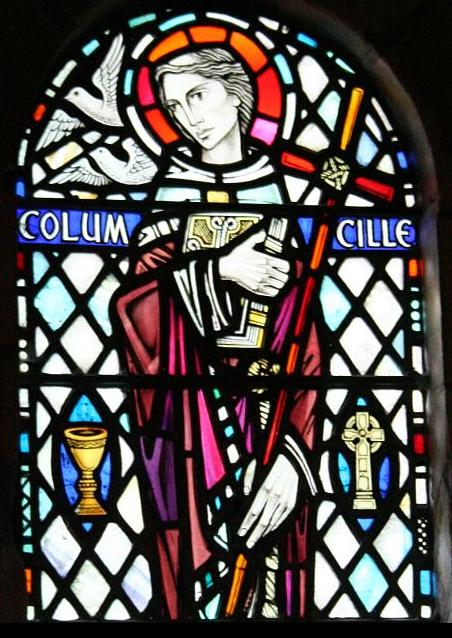
*도네골의 왕족 청년*
콜룸바(Colum Cille, 교회의 비둘기)는 521년 12월 7일 — 아일랜드 북서부 도네골(Donegal) 가르탄 호숫가의 오닐 왕족 가문에서 태어났다. 부친은 페델미드 왕. 그의 가문은 — 아일랜드 최고 권력 가문 중 하나.
왕이 될 자격이 있는 청년. 그러나 — 그가 선택한 길은 수도원. 어릴 때부터 모빌라 수도원의 피니안(Finnian of Moville), 클로나르드의 피니안(Finnian of Clonard), 그리고 다른 거장 수도자들 밑에서 수도자 교육을 받았다.
청년 콜룸바는 — 학식과 영성이 깊었고, 25년 동안 — 아일랜드 안에 직접 약 25개의 수도원과 성당을 세웠다 (Derry, Durrow, Kells, Swords, Tory 등). 6세기 아일랜드 그리스도교의 가장 활발한 한 사람.
*한 책 때문에 — 3000명이 죽다*
그러나 — 그의 인생을 바꾼 한 사건이 있었다.
약 560년 — 콜룸바가 스승 피니안(모빌라의 피니안)의 시편집을 허락 없이 베껴서 — 자기 사본을 만들었다. 피니안이 알게 되어 — 그 사본을 돌려달라 요구. 콜룸바는 거절했다. “내가 베낀 것은 내 것이다. 책의 원본은 너의 것이지만, 사본은 — 나의 노동의 산물이다.”
아일랜드 최초의 저작권 분쟁. 결국 — 디아르마이트 왕(High King)의 재판에서 — “송아지는 어미 소의 것이다. 사본은 — 원본의 것이다.” 왕이 콜룸바에게 사본 반환을 명령.
콜룸바는 — 받아들이지 않고 — 자기 가문의 군대와 동맹 부족을 동원해 — 왕에게 도전. 561년 — 큐일 드레브네 전투(Battle of Cúl Dreimhne) — 3,000명이 죽었다.
*추방* — *3000명의 빚*
전투 후 — 아일랜드의 모든 주교들이 함께 모여 — 콜룸바를 파문할지 결정하기 위한 시노드 소집. 콜룸바의 친구 성 라이세란(Saint Laisrén)이 — 파문 대신 — 추방을 제안. 콜룸바가 자기 죄책감을 — 사명으로 바꿀 길을 열어주려는 자비.
콜룸바 자신이 한 결심 — “내가 죽인 영혼의 수만큼 — 내가 그분께 데려가는 영혼이 있어야 한다. 약 3,000명.”
그리고 — 아일랜드를 영원히 떠나기로 했다. 자기가 가장 사랑한 그 땅을 — 다시 보지 않기로 — 한 결심.
*563년 — 이오나*
563년 — 42세의 콜룸바가 — 12명의 동료(예수님의 12사도를 본받음)와 함께 — 작은 가죽 배(currach)에 타고 아일랜드를 떠났다.
스코틀랜드 서해안의 작은 섬 이오나(Iona / Hy) — 황량한 화산 바위, 약 5km 길이. 그가 처음 도착한 자리에서 뒤를 돌아봐 아일랜드가 안 보이는 자리를 찾아 — 거기 정착. 처음 도착했던 자리에 작은 언덕 — Carn-cul-ri-Eirinn(아일랜드를 등진 언덕) — 이름이 남았다.
거기 작은 수도원을 세웠다. 서까래는 짚, 벽은 흙. 34년간 — 그가 그 자리를 떠나지 않았다.
*스코틀랜드의 사도*
이오나에서 콜룸바가 한 일:
— 픽트족(스코틀랜드 북부 원주민, 드루이드교의 가장 강한 자리)에게 직접 선교. 그가 픽트족 왕 브루데를 찾아가 — 왕궁 문이 닫혀 있을 때 — 십자가 표시를 그리니 문이 저절로 열렸다는 전승. — 수많은 수도자를 양성해 — 영국·아일랜드 전역에 보냈다. — 이오나 수도원이 — 영국·스코틀랜드·아일랜드 — 켈트 그리스도교 전체의 영적 중심. — 그의 제자 아이단(Aidan)이 — 영국 노섬브리아 린디스판에 새 수도원을 세워 — 영국 북부 전체를 그리스도교화. 콜룸바의 한 결심에서 — 영국·스코틀랜드·아일랜드 전체의 신앙이 흘렀다.
*네스호의 괴물* — 가장 이른 기록
콜룸바의 전기에 — 네스호의 괴물(Loch Ness Monster)의 가장 이른 기록이 있다.
565년 — 콜룸바가 네스 강을 건너던 중, 큰 짐승이 한 사람을 공격하려 하자 — 콜룸바가 십자가 표시를 그리며 외쳤다 — “물러서라! 더 이상 사람을 공격하지 말라!”. 짐승이 물속으로 사라졌다(아돔난 「성 콜룸바의 생애」 2,27).
7세기 가장 이른 네스 호수 짐승 기록. 현대 네스호 괴물 신화의 영적 원형.
*597년 6월 9일* — 시편을 베끼다가
597년 6월 9일 새벽. 76세의 콜룸바가 — 자기 수도원 성당에서 — 시편을 베껴 쓰던 중에 — 평화롭게 선종.
마지막 한 줄을 쓰던 책 — 시편 34편 11절 — “주님을 찾는 이는 — 무엇 하나 부족함이 없다.” 그가 그 한 줄을 쓰고는 — 펜이 멈췄다. 다음 줄을 그의 제자 바이텐이 이어 썼다.
마지막 한 시간 — 그가 동료들에게 한 마지막 강복. 일생 3000명의 빚을 갚으려 떠난 사람이 — 평화로이 잠들었다.
시성 — 사도 시대 보편 공경
축일 6월 9일. 스코틀랜드의 사도 · 아일랜드의 세 번째 주보 성인(패트릭·브리지다·콜룸바). 영국·아일랜드·스코틀랜드 — 책 사본 제작자·시인의 주보 성인.
이오나 수도원은 — 바이킹 침공 시기 약탈되었다가 후일 재건. 오늘날 — 스코틀랜드 국교회와 가톨릭이 공동으로 사목하는 화해의 자리. 연 수만 명의 순례자가 그 작은 섬을 찾는다.
그가 찾아간 하느님의 뜻
콜룸바의 일생은 — 자기 잘못의 무게를 — 사명으로 바꾼 사람의 가장 강력한 증언이다. 그가 3000명의 죽음에 책임이 있다고 느꼈을 때 — 그는 도망치지 않았다. 3000개의 영혼을 — 그리스도께 데려가는 것을 자기 평생의 빚으로 받아들였다.
그리고 — 아일랜드를 영원히 떠나는 결심. 그가 가장 사랑하는 땅을 떠나야 — 새 사명이 시작될 수 있었다. Carn-cul-ri-Eirinn — 아일랜드를 등진 언덕. 돌아보지 않는 등의 무게가 — 사명의 깊이.
시대의 한 폭 — 6세기 켈트 선교와 이오나 수도원
콜룸바(521~597)가 563년 아일랜드를 떠나 스코틀랜드 서해안의 작은 섬 이오나(Iona)에 수도원을 세운 그 한 자리는 — 중세 유럽 그리스도교 문명의 한 큰 수원이 되었다. 이오나는 — 면적 약 9㎢의 작은 섬이지만, 6~8세기 사이 그곳에서 — 영국 북부 픽트(Pict)족, 잉글랜드 노섬브리아 왕국, 그리고 대륙으로 가는 켈트 선교사들 수백 명이 양성되었다. 635년 — 이오나의 수도사 아이단(Aidan)이 노섬브리아 왕 오스왈드의 초청으로 린디스파른(Lindisfarne, 잉글랜드 북동 해안 섬)에 가서 잉글랜드 북부 그리스도교화의 모태가 되었다. 이오나에서 만들어진 「켈스의 서(Book of Kells)」는 — 9세기 초 켈트·픽트·앵글로색슨·비잔티움 양식이 융합된 채색 복음서로 — 서양 중세 미술의 한 정점으로 평가받는다(오늘날 더블린 트리니티 대학 도서관에 보관, 매년 50만 명이 보러 옴). 그러나 콜룸바의 길은 평탄하지 않았다 — 그가 아일랜드를 떠난 이유 자체가 — 한 필사본을 둘러싼 사촌과의 분쟁이 부족 전쟁으로 번져 그가 추방된 것이었다. “나는 3,000명의 죽음에 책임이 있다. 그만큼 영혼을 그리스도께 인도하겠다”는 평생의 속죄가 — 그를 작은 섬의 수도원장으로 묶어 두었다. 한 사람의 회개가 — 한 섬을 만들었고, 그 섬이 한 대륙의 한 시대를 만들었다.
묵상
콜룸바는 우리에게 묻는다 — 너의 잘못의 무게가 — 너의 사명의 뿌리가 될 수 있는가? 부끄러운 과거가 — 도망의 이유가 아니라, 되갚음의 동력이 될 때 — 그 인생이 바뀐다. 그리고 — 너의 마지막 손이 — 시편 한 줄을 베끼는 자리에서 멈출 수 있는가?
Saint Columba of Iona
Sanctus Columba Ionae · 521 – June 9, 597 · Third Patron Saint of Ireland · Apostle of Scotland · Founder of Iona Abbey · “The Debt of Three Thousand Lives, Owed Because of One Book”
*A Young Prince of Donegal*
Columba (Colum Cille, “the dove of the church”) was born on December 7, 521 — on the shores of Loch Gartan in Donegal, in northwestern Ireland, into the royal Uí Néill clan. His father was King Fedlimid. His family was one of the most powerful in Ireland.
A young man qualified to be a king. But — the road he chose was the monastery. From childhood he received monastic education under Finnian of Moville, Finnian of Clonard, and other great teachers.
The young Columba — was deeply learned and deeply holy, and over twenty-five years he himself founded about twenty-five monasteries and churches across Ireland (Derry, Durrow, Kells, Swords, Tory, and more). One of the most energetic figures of sixth-century Irish Christianity.
*Three Thousand Dead — Because of One Book*
But then — one event changed his life.
Around 560 — Columba copied without permission a psalter belonging to his teacher Finnian (of Moville) and made his own copy of it. When Finnian found out, he demanded the copy back. Columba refused. “What I have copied is mine. The original is yours, but the copy is the fruit of my labor.”
The first copyright dispute in Irish history. The case went to the judgment of the High King Diarmait: “The calf belongs to the cow. The copy belongs to the original.” The king ordered Columba to give the copy back.
Columba — would not accept the judgment. He summoned his clan’s army and allied tribes and went to war against the High King. In 561 — the Battle of Cúl Dreimhne — three thousand men died.
*Exile* — *The Debt of Three Thousand Souls*
After the battle — all the bishops of Ireland convened a synod to decide whether to excommunicate Columba. His friend Saint Laisrén — proposed exile rather than excommunication. A mercy meant to give Columba a way to convert his guilt into mission.
Columba’s own resolution — “For every soul I have caused to die, I must bring one to Him. About three thousand.”
And — he resolved to leave Ireland forever. Never again to see the land he most loved.
*563 — Iona*
In 563 — the 42-year-old Columba, with twelve companions (in imitation of the Twelve Apostles), set out in a small leather coracle (currach) and left Ireland.
Iona (Iona / Hy) — a small, desolate volcanic island about three miles long off the western coast of Scotland. From the place where he first landed, he searched until he found the spot from which Ireland could no longer be seen — and settled there. The small hill where he first landed is still named “Carn-cul-ri-Eirinn” (“the hill of the back turned to Ireland”).
There he built a small monastery. The roof of thatch, the walls of earth. For thirty-four years he never left that place.
*The Apostle of Scotland*
What Columba did from Iona:
— Preached personally to the Picts (the native peoples of northern Scotland, the strongest stronghold of druidism). When he went to King Bridei of the Picts and found the palace gates locked, tradition says — he made the sign of the cross, and the gates opened of themselves. — Trained countless monks, who were sent throughout Britain and Ireland. — Iona Abbey became the spiritual center of all Celtic Christianity — Britain, Scotland, and Ireland. — His disciple Aidan founded a new monastery at Lindisfarne in Northumbria — and from there evangelized all of northern England. From a single resolution of Columba flowed the faith of Britain, Scotland, and Ireland together.
*The Loch Ness Monster* — The Earliest Account
In Columba’s biography is the earliest known record of the Loch Ness Monster.
In 565 — as Columba was crossing the River Ness, a great beast moved to attack a man. Columba made the sign of the cross and cried — “Back! Do not approach this man any further!” The beast withdrew into the water (Adomnán, Life of Saint Columba 2.27).
The earliest seventh-century record of a beast in Loch Ness. The spiritual prototype of the modern Loch Ness legend.
*June 9, 597* — *Copying the Psalter*
At dawn on June 9, 597. Columba, 76 years old, died peacefully in his own monastery church while copying out the Psalter.
The last book he was copying — Psalm 34:11 — “They who seek the Lord shall not want for any good thing.” He wrote that line, and his pen stopped. His disciple Baithéne continued the next line.
His last hour — he gave a final blessing to his community. A man whose life had been spent repaying a debt of three thousand fell asleep in peace.
Canonization — Apostolic-Era Universal Veneration
Feast day June 9. Apostle of Scotland. Third patron saint of Ireland (Patrick, Brigid, Columba). Patron saint of British, Irish, and Scottish manuscript copyists and poets.
Iona Abbey was plundered during the Viking raids and rebuilt later. Today it is a place of common ministry by the Church of Scotland and the Catholic Church — a place of reconciliation. Tens of thousands of pilgrims come every year to that small island.
The Will of God He Sought
Columba’s life is the most powerful witness of a man who turned the weight of his fault into a mission. When he felt himself responsible for the deaths of three thousand, he did not flee. He took as the debt of his lifetime — to bring three thousand souls to Christ.
And — the resolve to leave Ireland forever. Only by leaving the land he most loved could a new mission begin. Carn-cul-ri-Eirinn — “the hill of the back turned to Ireland.” The weight of a back that will not look back is the depth of mission.
A Snapshot of the Age — Iona and Celtic Mission
Columba (521–597), founding his monastery on the small Scottish island of Iona (about 9 km²) in 563, opened — one of the great springs of medieval European Christianity. In the sixth through eighth centuries, from this tiny island, hundreds of missionaries went out — to the Picts of northern Britain, to the Anglo-Saxon kingdom of Northumbria, and onto the continent. In 635 Aidan, an Iona monk, accepted the invitation of King Oswald of Northumbria to settle at Lindisfarne (a small island off the northeast English coast) — the mother-house of Christianity in northern England. The Book of Kells, produced at Iona at the start of the ninth century, blends Celtic, Pictish, Anglo-Saxon, and Byzantine styles into one of the summits of medieval Western art (preserved today at Trinity College Library in Dublin, drawing about 500,000 visitors a year). Columba’s road was not smooth — he left Ireland precisely because a quarrel with his cousins over a manuscript spilled into clan war and he was exiled, holding himself responsible for 3,000 deaths. His lifelong penance — “I will bring to Christ as many souls as fell in that battle” — bound him to the abbacy of one small island. One man’s repentance made an island, and one island made an age of one continent.
Meditation
Columba asks us — can the weight of your fault become the root of your mission? When a shameful past becomes not a reason to flee but the engine of restitution — that life is turned around. And — can your last hand come naturally to rest at the copying of a single line of the Psalms?