성 바오로 사도
Sanctus Paulus · 5/10년 ~ 64/67년 · 타르수스의 박해자 → 이방인의 사도
타르수스의 한 청년
기원후 5년에서 10년 사이, 오늘날의 튀르키예 남부 도시 타르수스(Tarsus). 지중해와 동방 무역로가 만나는 항구 도시. 그곳에서 한 유다인 가정에 사내아이가 태어났다. 부모는 그에게 베냐민 지파의 첫 왕 이름을 따 사울(Saul)이라 지었다. 그 아이는 자라며 동시에 두 세계의 시민이 되었다 — 베냐민 지파의 자긍심을 안은 율법 학도이자, 동시에 로마 시민권자. 후자는 그의 아버지가 어떻게 얻었는지 알려져 있지 않지만, 1세기 유다인 중 매우 드문 신분이었다.
청년 사울은 예루살렘으로 유학을 떠났다. 당대 최고의 랍비 가말리엘(Gamaliel) 문하 — 그 학파는 후일 사도행전 5장에서 그리스도교 운동에 대해 “이 일이 사람에게서 났다면 무너질 것이고, 하느님에게서 났다면 그대들이 막을 수 없다”고 신중을 권한 바로 그 가말리엘의 학교였다. 그러나 그 신중함은 제자에게 전해지지 않았다. 사울은 격렬했다. 율법에 대한 그의 열정은 곧 새 종파에 대한 분노로 폭발한다.
스테파노의 돌과 한 청년의 외투
기원후 34년경 어느 날, 예루살렘 성문 밖. 첫 그리스도인 순교자 스테파노가 돌에 맞아 죽어가고 있었다. 그를 돌로 치던 자들이 거추장스러운 겉옷을 벗어 한 청년의 발치에 쌓았다. 그 청년의 이름이 사울이었다(사도 7,58). 사도행전은 한 줄을 더한다 — “사울은 스테파노를 죽이는 일에 찬동하고 있었다”(사도 8,1).
이후 몇 년간 사울은 그리스도교 박해의 가장 무서운 얼굴이 되었다. 그는 집집을 뒤져 그리스도인들을 잡아들였고, 멀리 다마스쿠스(다마섹)까지 출장 영장을 받아 떠나기를 자청했다.
다마스쿠스 길 — 정오의 빛
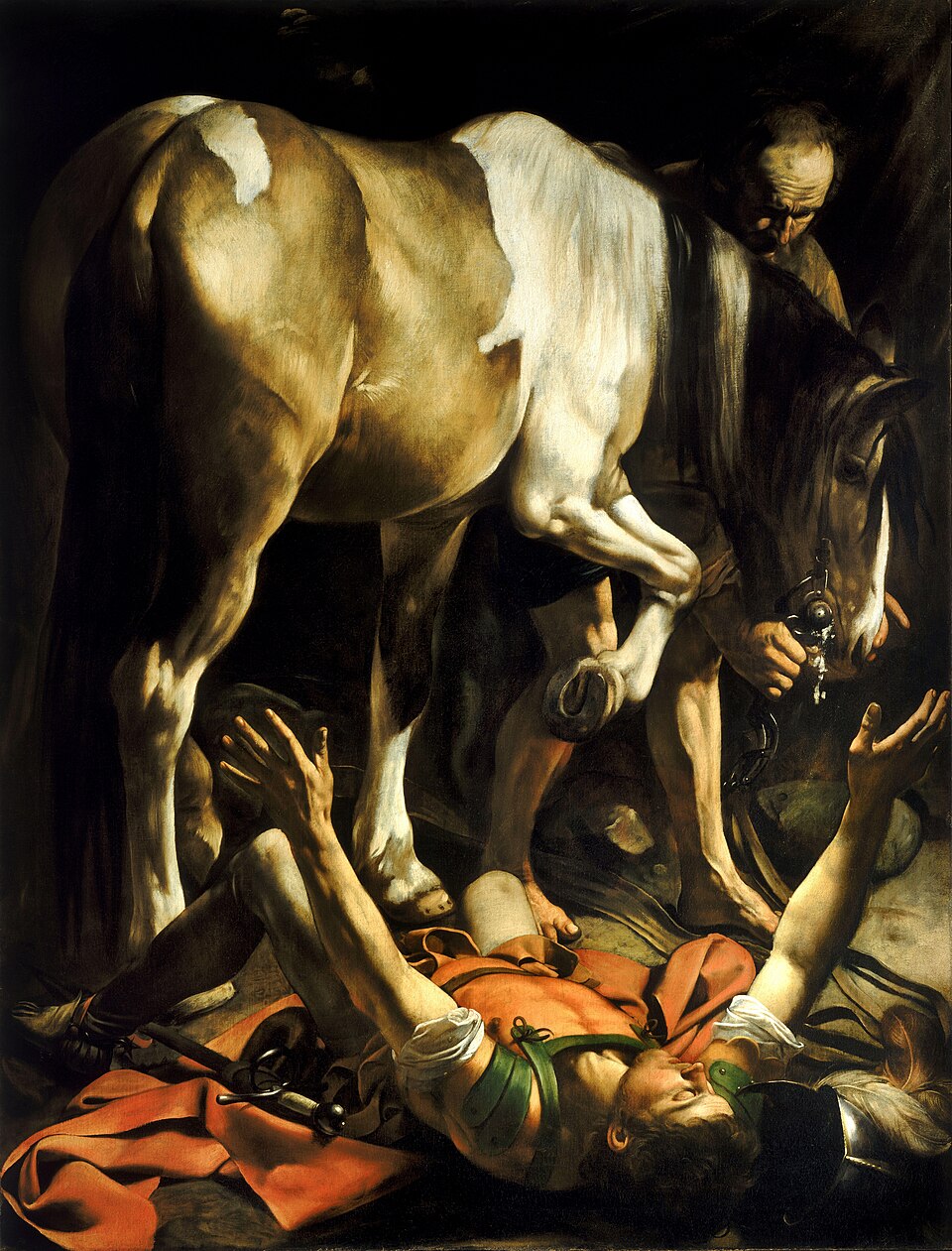
35년 어느 날 정오 무렵. 다마스쿠스가 시야에 들어올 즈음, 갑자기 하늘에서 빛이 그를 둘러쌌다. 그가 땅에 쓰러졌다. 한 음성이 들렸다.
“사울아, 사울아, 왜 나를 박해하느냐?” “주님, 누구십니까?” “나는 네가 박해하는 예수다”(사도 9,3-5).
3일간 그는 눈이 멀고, 먹지도 마시지도 않았다. 다마스쿠스의 한 그리스도인 아나니아가 두려움을 무릅쓰고 그를 찾아갔다 — 사울의 손에 죽으러 가는 길이라 여기면서. 그러나 아나니아가 안수하자 사울의 눈에서 비늘 같은 것이 떨어졌고, 그는 시력을 되찾았다. 그날 그는 세례를 받았다.
그가 가장 박해하던 그 길이, 이제 그의 길이 되었다. 이름도 그리스식 ‘바오로(Paulos)’로 새겨졌다.
사라진 14년 — 아라비아의 침묵
회심 직후 바오로는 갑자기 사라진다. 그가 갈라티아서에서 직접 회상하기를, 그는 “곧바로 아라비아로 갔다가 다시 다마스쿠스로 돌아갔다”(갈라 1,17). 정확히 어디서, 무엇을, 얼마나 했는지는 기록되어 있지 않다. 학자들은 약 3년 — 어쩌면 그 이상 — 으로 추정한다. 그 침묵의 광야에서 한 박해자가 다시 빚어졌다.
그 후에도 그는 안티오키아 교회에서 또 한참을 지냈다. 회심부터 첫 정식 선교 출발까지 약 14년. 부르심받았다고 곧 사도가 되지 않는다. 광야의 시간이 필요했다.
세 차례의 대선교 여행 — 지중해를 가로지른 발
바오로의 발걸음은 약 30년 동안 지중해 세계를 동에서 서로 가로질렀다. 학자들이 추산하기를 약 2만 km를 걸었거나 배로 다녔다.
그가 그렇게 멀리, 그렇게 자주 움직일 수 있었던 데에는 한 시대의 인프라가 있었다 — 팍스 로마나(Pax Romana). 아우구스투스 이후 1·2세기 로마 제국은 지중해 전역을 한 행정·도로·통화 체계로 묶었다. 총 8만 km에 이르는 포장된 로마 가도가 영국의 안개 낀 변경에서부터 시리아 사막까지 뻗어 있었고, 해적이 거의 사라진 지중해에서는 알렉산드리아의 곡물선이 정기 항로로 로마에 닿았다. 언어도 통일되어 있었다 — 서쪽은 라틴어, 동쪽은 코이네 그리스어. 그 코이네 그리스어로 바오로는 편지를 쓰고 설교했고, 신약성경 27권 모두가 같은 언어로 기록될 수 있었다. 또한 동방 디아스포라의 유다인 회당이 안티오키아·에페소·테살로니카·코린토·로마 등 거의 모든 큰 도시에 미리 자리 잡고 있었다 — 제1세기 디아스포라 유다인은 제국 인구의 약 7~10%. 바오로는 새 도시에 도착할 때마다 먼저 회당을 찾았고(사도 17,2), 거기에서 그리스어로 구약을 함께 읽던 하느님을 경외하는 이방인(God-fearers) 청중이 — 그의 첫 회심자들이 되었다. 제국의 도로, 제국의 언어, 디아스포라의 회당 — 이 세 가지가 없었다면 바오로의 14년은 14달도 가지 못했을 것이다.
1차 여행 (46~48년): 바르나바와 함께 키프로스 → 소아시아 남부(피시디아의 안티오키아·이코니움·리스트라·데르베). 리스트라에서는 그를 신으로 오해한 군중이 황소를 잡아 제사 드리려 했고, 같은 군중이 다음 날엔 그를 돌로 쳐 죽은 줄 알고 성 밖에 내버렸다(사도 14장).
예루살렘 사도회의 (50년): 이방인 그리스도인도 모세 율법을 지켜야 하느냐는 큰 논쟁. 바오로의 견해 — “구원은 율법의 행위가 아니라 그리스도 안의 믿음으로” — 가 공식 인정된 결정적 순간.
2차 여행 (50~52년): 마케도니아의 환시 — 한 사람이 그를 부른다, “이리로 건너와 우리를 도와주시오”(사도 16,9). 유럽 그리스도교의 시작. 필리피·테살로니카·아테네·코린토.
3차 여행 (53~57년): 에페소에서 3년. 거기서 코린토서를 썼다.
13개의 편지 — 책상이 아니라 감옥에서 쓴 신학
바오로의 가장 큰 유산은 발자국이 아니라 편지다. 신약성경 27권 중 13권이 그의 이름으로 전해진다. 그가 직접 썼다고 학자들이 거의 모두 동의하는 일곱 편(로마서·코린토 1·2서·갈라티아서·필리피서·테살로니카 1서·필레몬서) 외에, 그의 영향 아래 쓰여진 여섯 편을 합쳐 신약의 거의 절반.
이 편지들은 평온한 서재에서 나오지 않았다. 감옥에서, 항해 중에, 일하면서, 박해 한가운데서 쓰였다. 그는 천막 만드는 일로 생계를 유지했다(사도 18,3). 한 손엔 가죽 바늘, 다른 손엔 펜이었다.
가장 유명한 두 줄을 옮긴다 — “이제 나는 살아 있지만 그것은 내가 아닙니다. 그리스도께서 내 안에서 사시는 것입니다”(갈라 2,20). “사랑은 참고 기다립니다. 사랑은 친절합니다. 사랑은 시기하지 않고 뽐내지 않으며 교만하지 않습니다…”(1코린 13장).
로마로 — 황제에게 상소하다
57년경 예루살렘에서 그가 체포된다. 죄명은 “성전을 모독했다.” 그는 로마 시민권을 행사해 카이사르에게 직접 상소하겠다고 선언한다(사도 25,11). 죄수 신분으로 그는 로마까지 호송된다. 그 항해 중 지중해 한복판에서 큰 풍랑을 만나 14일을 표류하다 몰타 섬에 좌초한다(사도 27장). 거기서도 그는 복음을 전한다.
로마에 도착해서는 가택 연금 상태로 2년간 자유롭게 그리스도를 전한다(사도 28장). 사도행전은 거기서 끝난다 — 그가 어떻게 죽었는지는 다른 자료들이 전한다.
참수 — 시민의 죽음
64년 7월, 로마 대화재. 네로 황제가 그리스도인을 희생양으로 삼는다. 베드로와 함께 바오로도 그 박해에 휘말린다. 다만 그는 로마 시민이었기에 십자가형이 아니라 참수형을 선고받는다(로마 시민에게는 더 ‘명예로운’ 처형 방식이었다). 64~67년 사이, 정확한 날짜는 모르지만, 로마 남쪽 오스티아 가도 변 — 오늘날의 ‘세 분수 수도원(Tre Fontane)’ 자리 — 에서 그의 목이 칼에 베였다. 전승은 말한다, 그의 목이 땅에 떨어진 자리에서 세 개의 샘이 솟았다고.
그가 묻힌 자리에 4세기 콘스탄티누스 황제가 첫 성당을 세웠고, 그 자리에 오늘의 성벽 밖 성 바오로 대성당(San Paolo fuori le Mura)이 서 있다.
그가 찾아간 하느님의 뜻
바오로의 일생은 한 줄로 요약된다 — 가장 강하게 반대하던 자가 가장 강하게 사랑하는 자가 되었다. 다마스쿠스 길의 그 빛은 그를 칭찬한 빛이 아니라 그를 부순 빛이었다. 그러나 부서진 자리에서 그는 다시 만들어졌다.
그가 찾아간 하느님의 뜻은 그가 원하던 것과 정확히 반대였다. 그는 율법을 지키려 했다 — 하느님은 그를 율법 너머로 보내셨다. 그는 유다인의 정결을 지키려 했다 — 하느님은 그를 이방인에게 보내셨다. 그는 새 종파를 박멸하려 했다 — 하느님은 그를 그 종파의 가장 큰 설교가로 만드셨다.
하느님의 뜻은 자주 우리의 뜻을 거꾸로 돌린다. 그리고 그 거꾸로 됨이, 한 생을 의미로 가득 채운다.
묵상
오늘 우리에게도 다마스쿠스가 있다. 우리가 가장 화내는 사람, 가장 받아들이지 못하는 진실, 가장 외면하던 부르심. 그 길 위에서 빛이 우리를 쓰러뜨릴 때 — 도망치지 않고 묻는다면 — “주님, 당신은 누구십니까?” — 그 순간이 회심의 시작이다.
Saint Paul the Apostle
Sanctus Paulus · c. 5/10 – c. 64/67 A.D. · The Persecutor of Tarsus → Apostle to the Gentiles
A Young Man of Tarsus
Sometime between A.D. 5 and 10, in Tarsus — a port city of southern Asia Minor (modern-day Turkey) where Mediterranean shipping lanes met the trade roads of the East — a boy was born into a devout Jewish family. His parents named him Saul, after the first king of Israel, who had also been of the tribe of Benjamin. The child grew up a citizen of two worlds at once: a student of the Law carrying the pride of Benjamin, and a holder of Roman citizenship. How his father had acquired the latter is unknown, but it was an extraordinarily rare status for a Jew of the first century.
The young Saul went to Jerusalem for advanced studies. He sat at the feet of Gamaliel (Acts 22:3) — the most respected rabbi of his generation, the same Gamaliel who would later urge caution before the Sanhedrin about the new Christian movement: “If this plan is of human origin, it will fail; but if it is of God, you will not be able to overthrow them” (Acts 5:38–39). The master’s caution, however, did not pass to the pupil. Saul was fierce. His zeal for the Law would soon erupt as rage against the new sect.
Stephen’s Stones — A Young Man’s Cloak
Around A.D. 34, outside the gates of Jerusalem. The first Christian martyr, Stephen, was being stoned to death. Those throwing the stones laid their cumbersome outer cloaks at the feet of a young man so that they could throw more freely. That young man’s name was Saul (Acts 7:58). The Book of Acts adds one more line, almost in passing — “and Saul approved of their killing him” (Acts 8:1).
In the years that followed, Saul became the most feared face of Christian persecution. He searched house by house, arresting believers; he volunteered to carry warrants as far as Damascus — a Hellenistic city outside Judea — to drag Christians back in chains to Jerusalem.
The Damascus Road — Light at Noon
A.D. 35, around midday. As the walls of Damascus came into view, a light from heaven suddenly surrounded him. He collapsed to the ground. A voice spoke:
“Saul, Saul, why do you persecute me?” “Who are you, Lord?” “I am Jesus, whom you are persecuting” (Acts 9:3–5).
For three days he could not see; he ate and drank nothing. A Christian of Damascus named Ananias, despite his fear, came to him — believing he was walking to his own death at the hands of Saul. When Ananias laid his hands on him, something like scales fell from Saul’s eyes, and he could see again. That day he was baptized.
The road he had most violently persecuted became his own road. Even his name was reshaped — engraved in the Greek form Paulos (Paul), meaning “the small one.”
The Lost Fourteen Years — Silence in Arabia
After his conversion, Paul suddenly disappears from the record. As he himself recalls in his Letter to the Galatians, “I went away at once into Arabia, and again I returned to Damascus” (Galatians 1:17). Where exactly, what he did, and how long he stayed — none of this is told. Scholars estimate roughly three years, perhaps more. In that silent wilderness, a persecutor was unmade and remade.
Even after returning, he spent a long stretch quietly in the church at Antioch. From his conversion to his first formal missionary departure: about fourteen years. To be called is not yet to be sent. He needed the wilderness time first.
Three Great Missionary Journeys — Feet Across the Mediterranean
For nearly thirty years Paul’s feet traversed the Mediterranean world from east to west. Scholars estimate he covered some 20,000 kilometers on foot and by ship.
First journey (A.D. 46–48): With Barnabas — Cyprus → southern Asia Minor (Pisidian Antioch, Iconium, Lystra, Derbe). At Lystra a crowd mistook him for a god and brought oxen to sacrifice to him; the same crowd the next day stoned him and dragged him outside the city, thinking him dead (Acts 14).
The Council of Jerusalem (A.D. 50): The great controversy — must Gentile Christians keep the Law of Moses? Paul’s position — “Salvation comes not by the works of the Law but through faith in Christ” — was officially recognized. A pivotal moment in Christian history.
Second journey (A.D. 50–52): The vision at Troas — a man calling him over: “Come over to Macedonia and help us” (Acts 16:9). The beginning of European Christianity. Philippi, Thessalonica, Athens, Corinth.
Third journey (A.D. 53–57): Three years in Ephesus. There he wrote the Corinthian letters.
Thirteen Letters — Theology Written Not at a Desk but in a Prison
Paul’s greatest legacy is not his footsteps but his letters. Of the twenty-seven books of the New Testament, thirteen bear his name. The seven that almost all scholars agree he wrote himself (Romans, 1–2 Corinthians, Galatians, Philippians, 1 Thessalonians, Philemon) together with the six written under his influence make up nearly half of the New Testament.
These letters did not come out of a quiet study. They were written in prison, at sea, while working, in the heart of persecution. He earned his bread making tents (Acts 18:3). A leather needle in one hand, a pen in the other.
Two of his most famous lines: “It is no longer I who live, but Christ who lives in me” (Galatians 2:20). “Love is patient, love is kind. Love is not jealous or boastful or arrogant or rude…” (1 Corinthians 13).
To Rome — Appeal to Caesar
Around A.D. 57 he was arrested in Jerusalem. The charge: “profaning the Temple.” He invoked his Roman citizenship and declared he would appeal his case directly to Caesar (Acts 25:11). As a prisoner he was escorted toward Rome. Midway, in the middle of the Mediterranean, his ship was caught in a great storm; after fourteen days adrift, it ran aground on the island of Malta (Acts 27). Even there, he preached the gospel.
On reaching Rome he lived under house arrest for two years, freely preaching Christ to all who came to him (Acts 28). The Book of Acts ends there. How he died — for that we must turn to other sources.
Beheading — A Citizen’s Death
July, A.D. 64. The Great Fire of Rome. The emperor Nero turned the Christians into his scapegoat. Like Peter, Paul was swept into that persecution. But because he was a Roman citizen, he was sentenced not to crucifixion but to beheading — the more “honorable” execution reserved for citizens. Sometime between A.D. 64 and 67 — the exact date is unknown — along the Via Ostiense south of Rome, at the site today called the Abbey of the Three Fountains (Tre Fontane), his head was struck off by the sword. Tradition tells that where his head fell to the ground, three springs of water sprang up.
Where he was buried, in the fourth century the Emperor Constantine raised the first basilica. On that same site stands today the Basilica of St. Paul Outside the Walls (San Paolo fuori le Mura). Nineteenth-century excavations beneath its altar uncovered a first-century tomb that the Church recognizes as Paul’s resting place.
The Will of God He Sought
Paul’s life can be summed up in a single line: the one who opposed Christ most fiercely became the one who loved him most fiercely. The light on the Damascus road was not a light that praised him — it was a light that broke him. But in the place where he was broken, he was made again.
The will of God that he sought was the exact opposite of the will he had brought. He had meant to defend the Law — God sent him beyond the Law. He had meant to preserve Jewish purity — God sent him to the Gentiles. He had meant to wipe out a new sect — God made him its greatest preacher.
The will of God often turns our own will inside out. And in that inversion, a single life is filled to the brim with meaning.
A Snapshot of the Age — Pax Romana’s Three Roads
Paul could travel so far, so often, because the age itself had built the roads. The Pax Romana of the first and second centuries bound the Mediterranean under one administration, one road system, and one currency. 80,000 km of paved Roman roads stretched from misty Britain to the Syrian desert; an almost piracy-free Mediterranean carried Alexandria’s grain ships to Rome on regular schedules. Language too was unified — Latin in the west, Koine Greek in the east. Paul wrote and preached in that Koine, and every one of the 27 New Testament books was written in the same tongue. And almost every major city — Antioch, Ephesus, Thessalonica, Corinth, Rome — already held a Jewish diaspora synagogue (the diaspora made up roughly 7–10% of the empire’s population). Paul always went to the synagogue first (Acts 17:2), and there he met the God-fearers — Gentile sympathizers gathered around the Greek Scriptures — who became his first converts. The empire’s roads, its language, and its diaspora synagogues — three rails that made the fourteen years possible.
Meditation
Each of us, too, has a Damascus road. The person we are most angry with, the truth we are least able to accept, the calling we have most consistently looked away from. When the light strikes us on that road — if we do not flee, but instead ask, “Lord, who are you?” — that question is itself the beginning of conversion.