성 마티아 사도
Sanctus Matthias · ?~기원후 약 80년 · 이스카리옷 유다의 빈 자리에 뽑힌 사도
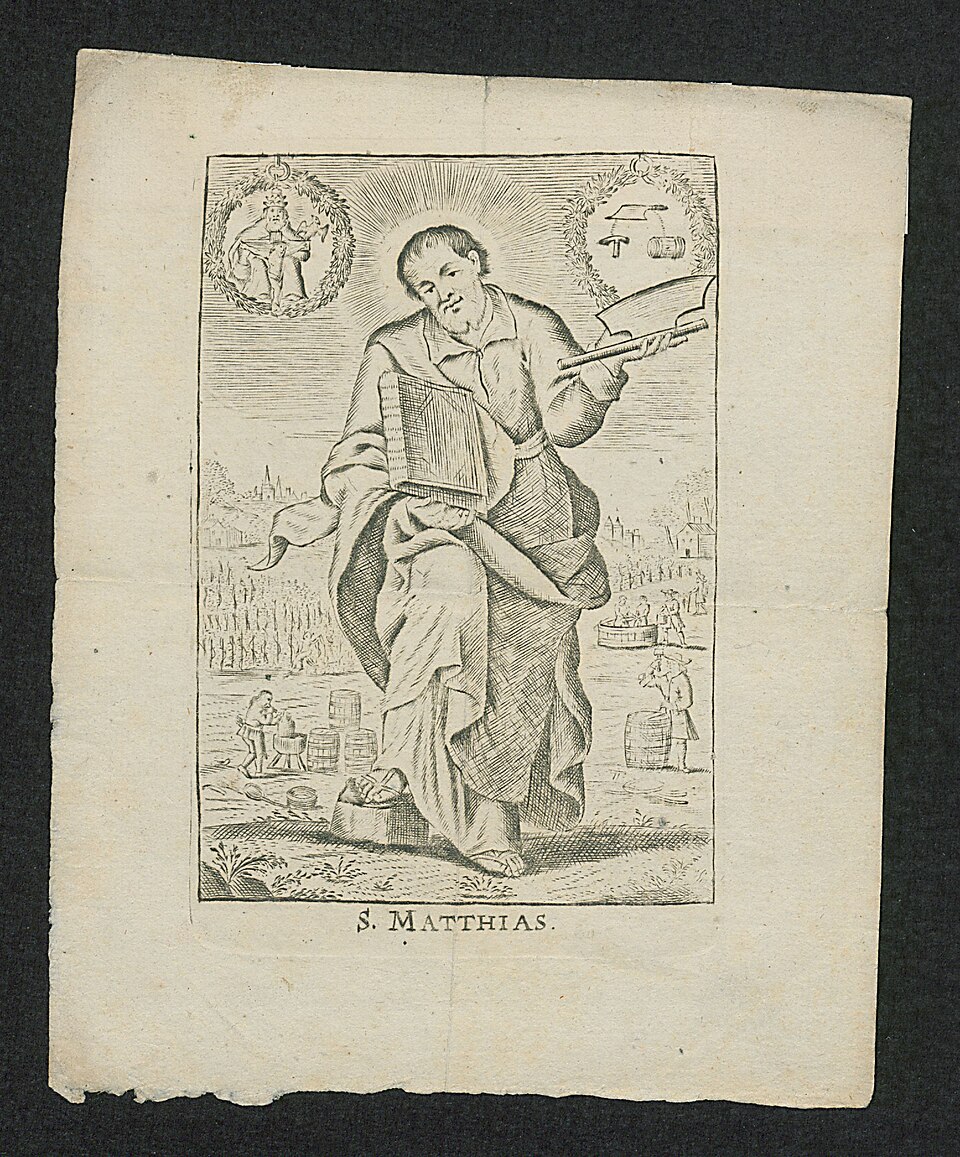
12명의 자리, 한 명의 공백
이스카리옷 유다가 스스로 목숨을 끊은 뒤, 12사도의 자리에 한 명이 비었다. 예수님께서 일부러 12를 세우신 데에는 이유가 있었다 — 이스라엘 12지파를 새 백성으로 회복시키시려는 표징이었다. 그 숫자가 깨지면 안 되었다.
오순절을 앞두고, 베드로가 일어나 결정한다. “그러므로 주 예수님께서 우리와 함께 지내신 모든 기간 동안, 곧 요한의 세례로부터 시작하여 우리에게서 하늘로 올라가신 날까지 줄곧 우리와 함께 다니던 이들 가운데 한 사람이, 우리와 더불어 그분 부활의 증인이 되어야 합니다”(사도 1,21-22).
두 후보, 그리고 제비
조건이 까다로웠다 — 세례자 요한 때부터 예수님 승천까지 줄곧 함께 있던 자. 그 자격을 갖춘 이가 두 명 추려졌다 — 요셉(별명 바르사빠, 또는 유스토)과 마티아.
“그들은 ‘주님, 모든 사람의 마음을 아시는 주님, 이 두 사람 가운데 누구를 뽑으셨는지 저희에게 보여 주십시오’ 하고 기도한 다음, 제비를 뽑으니 마티아가 뽑혀, 그는 열한 사도와 함께 사도가 되었다”(사도 1,24-26).
그리스도교 역사에서 마지막으로 제비뽑기로 결정된 사도였다. 오순절 이후로 사도들은 성령의 직접적인 인도를 받았기에, 제비뽑기는 더 이상 사용되지 않았다.
복음서에 한 줄도 없는 사람
마티아의 가장 큰 특징은 — 그 자신의 말이단 한 줄도 복음서에 남아 있지 않다는 점이다. 베드로처럼 큰소리를 친 적도, 토마스처럼 의심한 적도, 요한처럼 사랑받은 적도 — 기록에 없다. 그가 한 일은 단 하나, 늘 그 자리에 있었던 것.
세례자 요한이 예수님을 가리키시던 그 날, 그는 거기 있었다. 오병이어의 기적이 일어난 그 들판에, 그는 거기 있었다. 최후의 만찬 자리에서 사도들 너머 어딘가에, 그는 거기 있었다. 부활하신 분이 호숫가에 나타나셨을 때, 그는 거기 있었다.
그저 있는 것. 그것만으로 사도가 될 자격이 되었다.
제비뽑기(klēros)는 — 1세기 유다교에서 매우 무거운 결정 도구였다. 그것은 우연이 아니라 하느님의 직접적 의사 표시로 이해되었다. 구약 성경의 핵심 장면들이 모두 제비뽑기로 결정됐다 — 여호수아의 가나안 땅 분배(여호 18,10), 대제관이 매년 속죄일에 두 마리 염소 중 하나를 골라 광야에 보내는 의식(레위 16,8 — “아자젤을 위한 염소(scapegoat)”), 예루살렘 성전 사제의 매일 직무 배정(루카 1,9 — 세례자 요한의 아버지 즈카르야가 향을 사르는 직무에 뽑힌 그날). 모두 제비로 결정됐다. 그러므로 12사도의 빈 자리를 제비로 채운 것은 — 예수님 직접 부르심이 더 이상 가능하지 않은 자리에서, 유다교가 늘 해 오던 가장 거룩한 결정 방식을 마지막으로 한 번 빌린 것이었다. 오순절 열흘 뒤 성령이 강림하시면서 — 결정의 도구는 제비에서 성령의 인도로 옮겨졌다. 마티아는 그 마지막 다리 위에 서 있던 사람이다. 옛 방식과 새 방식 사이의 한 작은 경첩.
전승 — 어디로 떠났는가
마티아 이후의 행적은 전승에 따라 갈린다. 가장 유력한 전승은 에티오피아(혹은 카파도키아·콜키스 — 오늘의 조지아) 지방에서 복음을 전하다 순교했다는 것. 도끼나 돌로 죽임을 당했다고 전한다. 그래서 미술에서 그는 종종 도끼를 들고 있는 모습으로 그려진다.
또 다른 전승은 그가 예루살렘에서 돌에 맞고 결국 참수되었다고 한다. 그의 유해 일부는 성녀 헬레나(콘스탄티누스 황제 어머니)에 의해 로마와 트리어(독일)로 옮겨져, 오늘날 트리어 대성당에 안치되어 있다.
시성 — 사도시대 보편 공경
축일은 5월 14일 (구 전례력에서는 2월 24일). 사도시대부터 보편 공경.
그가 찾아간 하느님의 뜻
마티아의 일생은 한 가지를 가르친다 — 그저 있는 것의 거룩함. 누구나 말하는 자가 되려 하고, 누구나 빛나는 자가 되려 한다. 그러나 마티아는 빛나지 않았다. 말하지 않았다. 단지 — 처음부터 끝까지 그 자리에 있었다.
그것이 그를 사도로 만들었다. 배반자 유다의 자리를 채운 사도가 조용한 자였다는 것은 우연이 아니다. 시끄럽게 떠난 자리를 조용히 채울 사람이 필요했다.
묵상
우리는 자주 “내가 한 일이 너무 작아서 부끄럽다”고 생각한다. 그러나 마티아는 우리에게 묻는다 — 그저 끝까지 있는 것, 그것만으로도 충분하지 않은가? 누군가가 시끄럽게 떠난 자리, 그 빈 자리를 조용히 채울 마음 — 그것이 사도의 마음이다.
Saint Matthias the Apostle
Sanctus Matthias · ? – c. A.D. 80 · The Apostle Chosen to Fill the Empty Seat of Judas Iscariot
Twelve Seats, One Vacancy
After Judas Iscariot took his own life, one seat among the Twelve was empty. There was a reason Jesus had deliberately chosen Twelve — it was a sign of the restoration of the twelve tribes of Israel as a new people. That number could not be broken.
On the eve of Pentecost, Peter stood up and made the decision. “Therefore it is necessary that one of the men who have accompanied us during all the time that the Lord Jesus went in and out among us, beginning from the baptism of John until the day when he was taken up from us, become with us a witness to his resurrection” (Acts 1:21–22).
Two Candidates, and the Lot
The qualifications were strict — someone who had been with them all along, from John the Baptist’s time through to the Lord’s Ascension. Two men met the standard: Joseph called Barsabbas (also known as Justus), and Matthias.
“And they prayed, ‘Lord, who knows the hearts of all, show which one of these two you have chosen to take the place in this ministry and apostleship.’ And they cast lots for them, and the lot fell on Matthias, and he was numbered with the eleven apostles” (Acts 1:24–26).
He was the last apostle in Christian history to be chosen by lot. After Pentecost, the apostles were guided directly by the Holy Spirit, and the casting of lots was used no more.
The Man Without a Single Line in the Gospels
The most striking thing about Matthias — not a single word of his is preserved in the Gospels. He never spoke up boldly like Peter, never doubted like Thomas, was never the beloved one like John. None of that is recorded. The one thing recorded about him is this: he was always there.
The day John the Baptist pointed to Jesus on the riverbank, he was there. In the field where five loaves and two fish fed the multitude, he was there. Somewhere beyond the foreground at the Last Supper table, he was there. When the Risen Lord appeared by the lakeshore at dawn, he was there.
Just being there. That alone qualified him to be an apostle.
Tradition — Where Did He Go?
What happened to Matthias afterward varies by tradition. The strongest account sends him to Ethiopia (or to Cappadocia / Colchis — modern Georgia) to preach the Gospel and to die a martyr. He is said to have been killed with an axe or by stoning. In Christian art he is often depicted holding an axe.
Another tradition says he was stoned in Jerusalem and at last beheaded. A portion of his relics were brought by Saint Helena (mother of the Emperor Constantine) to Rome and to Trier in Germany, where they rest today in Trier Cathedral.
Canonization — Apostolic-Era Universal Veneration
Feast day May 14 (February 24 in the older calendar). Universally venerated since apostolic times.
The Will of God He Sought
Matthias’ life teaches one thing — the holiness of simply being there. Everyone wants to be a speaker; everyone wants to be the one who shines. But Matthias did not shine. He did not speak. He was only — from beginning to end — there.
That made him an apostle. It is no coincidence that the seat left empty by the betrayer Judas was filled by a quiet man. Where someone leaves loudly, someone is needed to fill the empty place quietly.
A Snapshot of the Age — The Lot as a Sacred Instrument
Casting lots (klēros) was — a very weighty decision-making tool in first-century Judaism. It was understood not as chance but as direct divine speech. The Old Testament’s most consequential moments were settled by lot — Joshua’s division of the land of Canaan (Josh 18:10), the high priest’s annual choice between the two goats on the Day of Atonement (Lev 16:8 — “the goat for Azazel,” the scapegoat), the daily assignment of priestly service in the Temple (Luke 1:9 — the day Zechariah, father of John the Baptist, was chosen by lot to burn the incense). So filling the vacant twelfth seat by lot was — at the moment when Jesus’s direct call was no longer possible — one last appeal to the holiest decision-procedure Judaism had ever used. Ten days later, at Pentecost, the instrument of decision passed from the lot into the guidance of the Spirit. Matthias stood on that last small bridge, the hinge between the old way and the new.
Meditation
We often feel ashamed because “what I do is too small.” But Matthias asks us — is it not enough to simply be there to the end? The seat someone has loudly abandoned, the quiet heart willing to fill it — that is the heart of an apostle.