성녀 콜카타의 데레사 (마더 데레사)
Sancta Teresia Calcuttensis* · 1910–1997 · 알바니아 출생 인도 사도 · 사랑의 선교회 창립자 · 1979년 노벨평화상
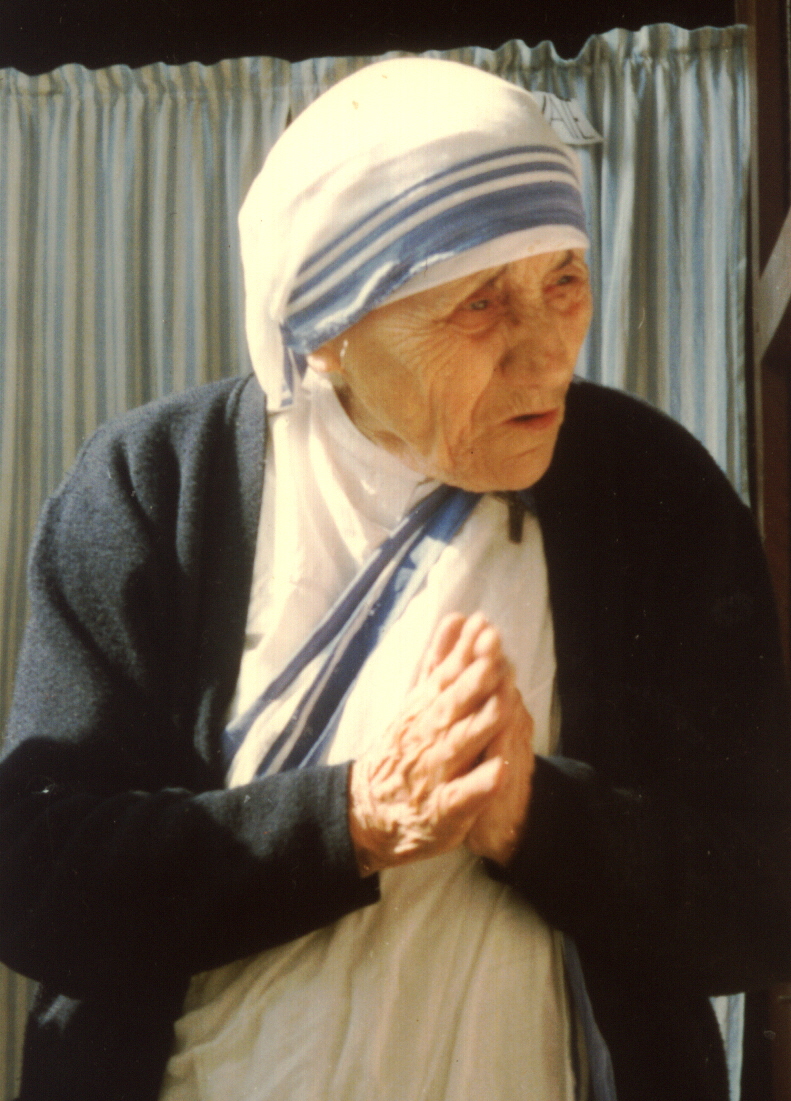
1948년 8월 17일, 캘커타
1948년 8월 17일. 인도 Calcutta (현 Kolkata). 38세의 수녀가 17년 동안 입었던 로레토 수녀회의 검은 수녀복을 벗고 — 흰색 면 사리 (saree) 를 처음 입고 캘커타의 모티즐 (가난한 동네) 거리에 처음 발을 디딘 날. 사리에는 세 줄의 파란 줄무늬 — 마리아의 색깔. 신발 — 없었다. 그녀가 가난한 인도 자매들과 같은 차림으로 그들 곁에 살기로 한 결단.
그녀의 이름은 — 마더 데레사. 본명 아녜즈 곤제 보야지우. 알바니아 출신. 그날 그 한 발의 발자국이 — 20세기 후반 세계의 가난을 위한 그리스도교의 가장 큰 운동을 시작시켰다.
알바니아 어린 시절
1910년 8월 26일 코소보 스코페 (현 북마케도니아) — 알바니아계 가톨릭 가정. 본명 Anjezë Gonxhe Bojaxhiu. 아버지 니콜라는 상인이자 시의원 — 그녀가 8살 때 독살되었다고 추정. 어머니 Drane가 3남매를 키웠다.
12살 — 첫 수도 소명 의식. 아일랜드의 로레토 자매회 선교사들의 이야기를 듣고 인도 선교에 마음이 끌렸다. 18살 — 아일랜드 더블린 로레토 수련소 입회. 1929년 — 18세에 인도 캘커타로 파견. 벵골어 학습 후 — Loreto Convent School 교사. 1937년 종신서원. 수도명 — Sister Teresa (테레사 리지외 — 를 따라서).
*부르심 안의 부르심* — 1946년 9월 10일
1946년 9월 10일. 캘커타-다르질링 기차 안. 인도의 수많은 빈민의 모습을 창밖에서 보던 중 — 그녀의 표현으로 “부르심 안의 또 다른 부르심” (the call within the call) 을 받았다. 수도원을 떠나 — 가장 가난한 자들 사이에서 — 그리스도를 발견하라는 내면의 음성.
이 부르심을 2년간 영적 지도자에게 검증했다. 1948년 8월 — 교황 비오 12세의 허락. 로레토 수녀복을 벗고 — 사리를 입었다. 처음에는 혼자. 한 명의 동료도 없이.
*Missionaries of Charity* (사랑의 선교회)
1949년 — Loreto Convent School에서 가르쳤던 옛 제자 수바시니 다스 등 첫 12명이 그녀를 따라왔다. 수녀복도 종신서원도 없이 — 그러나 비오 12세의 사목 인준은 받고 — 1950년 10월 7일 Missionaries of Charity — 사랑의 선교회 — 가 공식 창립*되었다.
회칙의 네 가지 서원 — 청빈, 순결, 순명, 그리고 “가난한 자 가운데 가장 가난한 자에게 전적이고 자발적인 봉사“. 마지막 네 번째 서원이 — 세계 모든 수도회 중 유일한 서원.
*Nirmal Hriday* — 죽어가는 자의 집
1952년 8월 22일 — 캘커타의 한 폐기된 힌두 사원 자리에 — Nirmal Hriday (무염시태의 집) — 길거리의 죽어가는 자들이 존엄하게 죽을 수 있는 집이 처음 열렸다. 거리에서 주워온 자들 — 매주 수십 명 — 마지막 며칠을 깨끗한 침대와 손을 잡아주는 자매들 곁에서 눈을 감았다. 힌두교인 무슬림 그리스도교인 — 모두. 그들의 임종이 — 그들의 종교에 따라 — 그들의 의식*으로 — 정확히 지켜졌다.
1953년 — Shishu Bhavan — 버려진 아기들의 집. 1957년 — 나환자 정착촌 Shanti Nagar (평화의 도시). 1960년대 — 세계 확장. 베네수엘라, 탄자니아, 로마. 1970년대 — 공산권 국가까지. 1986년 — 알바니아 본국으로 50년 만에 귀환.
마더 데레사 사망 시 1997년에 123개국 4,000명 자매들 + 5,000명 평신도 봉사자 + 1,000개 시설. 세계 사상 가장 빠른 속도로 확장한 가톨릭 수도회.
1979년 — 노벨평화상
1979년 노벨평화상. 시상식에서 그녀는 “평화는 낙태가 사라질 때 시작됩니다” 라는 논쟁적 연설. 시상식 후 Nobel Banquet도 거절하고 — 그 비용을 캘커타로 보내달라고 청했다.
그녀의 유명한 한 마디들: – “우리는 큰 일을 할 수 없다. 그러나 작은 일을 큰 사랑으로 할 수 있다.” – “외로움이 — 가장 무서운 가난이다.” – “가난한 자 한 사람의 얼굴 안에서 — 고난당하시는 그리스도를 만난다.”
1997년 9월 5일
말년의 심장병과 전화 발작. 1997년 9월 5일 87세에 캘커타 Mother House에서 선종. 마지막 시간 — 그녀가 50년 입고 다닌 사리 한 벌과 한 켤레 샌들만 남겼다. 개인 재산 — 0. 시신은 인도 국가장. 힌두 의식 후 가톨릭 미사 — 인도 역사상 처음 있는 간격.
시성 — 2016년, 프란치스코 교황
마더 데레사는 2003년 10월 19일 요한 바오로 2세 교황에 의해 시복되었고 (시성 절차 사상 가장 빠른 시복), 2016년 9월 4일, 프란치스코 교황에 의해 시성되었다. 바티칸 광장에 12만 명. 전 세계 100여 개국에서 마더 데레사 자매들이 모였다.
축일은 9월 5일 — 그녀의 선종일. 모든 가난한 자에게 봉사하는 사람·콜카타 본당·해외 선교사들의 주보 성녀.
그녀가 찾아간 하느님의 뜻
마더 데레사의 일생은 세 가지를 동시에 한 일생이었다. 첫째 — 행동 (Action). 매일 거리에서 손에 닿는 한 사람. 둘째 — 기도 (Prayer). 매일 4시 30분 기상 후 — 5시 미사 — 30분의 침묵 묵상. 셋째 — 내면의 어둠 (the Dark Night). 1948년 첫 부르심 이후 50년 동안 — 하느님의 부재의 체험을 그녀가 비밀히 견뎌냈다. 그녀가 죽은 후 서신에서 드러난 그 비밀은 — 20세기 영성사의 가장 충격적인 한 페이지다. 내가 사랑한 그리스도께서 50년 침묵하셨다 — 그래도 나는 그분을 사랑했다.
그녀의 일생은 한 줄로 이렇게 요약된다 — *부르심을 받은 후 50년의 영적 어둠 안에서도 — 거리의 한 사람을 매일 들고 그리스도께 안긴 한 사리의 수녀.*
묵상
오늘 우리는 기도 안에서 하느님의 침묵을 체험할 때 — 기도를 그만두는가, 더 깊이 들어가는가? 마더 데레사는 50년 동안 침묵하시는 그리스도를 그래도 사랑했다. 침묵의 자리야말로 — 가장 깊은 사랑이 자라는* 자리일지 모른다.
St. Teresa of Calcutta (Mother Teresa)
Sancta Teresia Calcuttensis* · 1910–1997 · Albanian-born apostle to India · Founder of the Missionaries of Charity · 1979 Nobel Peace Prize
17 August 1948, Calcutta
17 August 1948. Calcutta (today’s Kolkata), India. A nun of thirty-eight, after seventeen years in the black habit of the Loreto Sisters, took it off — and, for the first time, put on a white cotton sari and set foot on the streets of the Moti Jheel slums. The sari had three blue stripes — the colours of Mary. Shoes — none. She had chosen to live among her poor Indian sisters dressed as one of them.
Her name was — Mother Teresa. Born Anjezë Gonxhe Bojaxhiu. Albanian. That one step on that one day began the greatest twentieth-century Christian movement for the poor of the world.
An Albanian Childhood
Born on 26 August 1910 in Skopje in Kosovo (today’s North Macedonia) — an ethnic Albanian Catholic family. Her father, Nikollë, a merchant and city councillor, is believed to have been poisoned when she was eight. Her mother, Drane, raised the three children alone.
At twelve she had her first sense of religious vocation. Hearing stories of the Irish Loreto Sisters’ missions, she felt drawn to India. At eighteen she entered the Loreto novitiate in Dublin. In 1929 she was sent at eighteen to Calcutta. After learning Bengali she became a teacher at the Loreto Convent School. In 1937 she made her final vows. Her religious name — Sister Teresa (after Thérèse of Lisieux — Day 111).
*The Call within the Call* — 10 September 1946
10 September 1946. On a train from Calcutta to Darjeeling. As she gazed out the window at the countless poor of India, she received what she would later call “the call within the call” — an inner voice asking her to leave the convent and meet Christ among the poorest of the poor.
She tested the call with her spiritual director for two years. In August 1948, with the permission of Pope Pius XII, she laid down the Loreto habit and put on the sari. At first she was alone. Not a single companion.
*Missionaries of Charity*
In 1949 her first twelve companions — among them her former student Subhasini Das — followed her. Without a habit, without final vows — but with the pastoral approval of Pius XII — on 7 October 1950 the Missionaries of Charity was officially founded.
The constitutions had four vows — poverty, chastity, obedience, and a fourth unique among all religious congregations of the world: “wholehearted and free service to the poorest of the poor.”
*Nirmal Hriday* — The Home for the Dying
On 22 August 1952, in the site of an abandoned Hindu temple in Calcutta, Nirmal Hriday (The Pure Heart) opened — the first house in which the dying of the streets could die with dignity. Tens of those carried in from the streets each week — would close their eyes on clean beds with the hand of a sister in theirs, in their final days. Hindu, Muslim, Christian — all. Each person’s final rites were observed according to that person’s own religion.
In 1953 — Shishu Bhavan, the home for abandoned children. In 1957 — Shanti Nagar (City of Peace), a leper colony. In the 1960s — global expansion to Venezuela, Tanzania, Rome. In the 1970s — into communist countries. In 1986 — a return, after fifty years, to her native Albania.
At her death in 1997: 4,000 sisters in 123 countries, 5,000 lay co-workers, 1,000 institutions. The most rapidly expanding religious congregation in Catholic history.
1979 — The Nobel Peace Prize
1979 — the Nobel Peace Prize. In her acceptance speech she gave the controversial line: “Peace begins when abortion ends.” She refused the Nobel Banquet and asked instead that the money be sent to Calcutta.
Her best-known sentences: – “We cannot do great things. But we can do small things with great love.” – “Loneliness — is the worst poverty.” – “In the face of one poor person — we meet the suffering Christ.”
5 September 1997
In her last years, heart disease and strokes. On 5 September 1997, at eighty-seven, she died at the Mother House in Calcutta. She left behind one sari (the one she had worn for fifty years) and one pair of sandals. Her personal property — zero. The Indian state gave her a state funeral. Hindu rites followed by a Catholic Mass — a juxtaposition without precedent in Indian history.
Canonization — 2016, Pope Francis
Mother Teresa was beatified by Pope John Paul II on 19 October 2003 (the fastest beatification in canonization history) and canonized by Pope Francis on 4 September 2016. One hundred and twenty thousand filled St. Peter’s Square. Missionaries of Charity sisters from a hundred countries came.
Her feast is 5 September, the day of her death. She is patron of all who serve the poor, the parish of Calcutta, and overseas missionaries.
The Will of God She Sought
Mother Teresa’s life held three things at once. First, Action. Every day, on the street, the one person within reach. Second, Prayer. Every day — rising at 4:30, Mass at 5, a half hour of silent meditation. Third, the Dark Night. After her first call in 1948, for fifty years — she bore in secret the experience of God’s absence. The secret revealed in her letters after her death is one of the most striking pages of twentieth-century spirituality: The Christ I loved was silent for fifty years — and still I loved him.
Her life is one sentence: *a sari-wearing nun who, in fifty years of spiritual darkness after her call, lifted one person of the street into Christ’s arms every day.*
Meditation
When we experience God’s silence in prayer today — do we stop praying, or go in deeper? Mother Teresa, for fifty years, kept loving the Christ who was silent. The place of silence may be precisely where the deepest love grows.